POCSO Training in Lucknow

POCSO Act 2012

POCSO Training in Lucknow
For Schools, NGOs & Childcare Institutions

Protection of Children from Sexual Offences (POCSO) Act, 2012 training, child protection policy drafting and mandatory-reporting compliance — delivered onsite across Lucknow and Uttar Pradesh, and online across India.

  • Ph.D. in child & women's rights law
  • 12A & 80G certified NGO
  • Niti Aayog Darpan registered
  • Hindi & English sessions
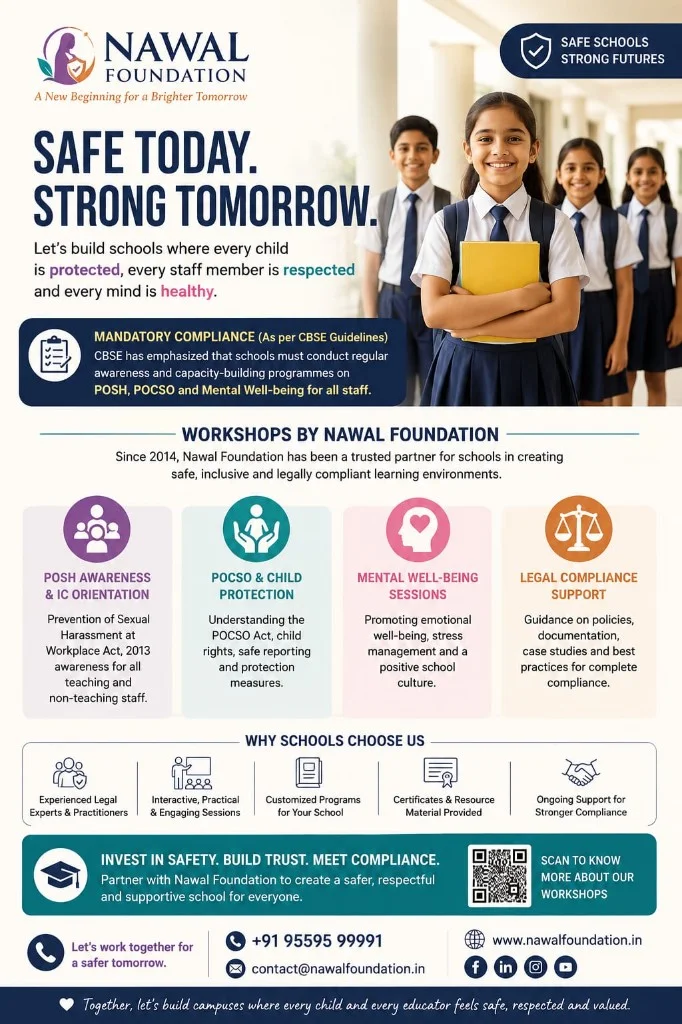
Nawal Foundation school workshop poster — Safe Today Strong Tomorrow: POSH awareness, POCSO and child protection, mental well-being sessions and legal compliance support for schools in Lucknow

Safe Today. Strong Tomorrow — school safety workshops by Nawal Foundation

Safe Schools, Strong Futures

Safe Today. Strong Tomorrow.

CBSE guidelines require schools to conduct regular awareness and capacity-building programmes on POSH, POCSO and mental well-being for all staff. Since 2014, Nawal Foundation has been a trusted partner for schools in Lucknow building safe, inclusive and legally compliant learning environments.

  • POSH awareness and IC orientation for teaching and non-teaching staff
  • POCSO and child protection training, safe reporting and protection measures
  • Mental well-being sessions for staff and students
  • Legal compliance support — policies, documentation and case studies

What Is POCSO Training And Who Needs It?

POCSO training is a mandatory child-safeguarding awareness programme under the Protection of Children from Sexual Offences Act, 2012 — the law that defines sexual offences against children in India and requires anyone in charge of a child's care to know how to prevent, recognise and report them.

It applies to schools, colleges, hostels, coaching institutes, NGOs, orphanages, sports academies and any organisation where adults work with children. Training must cover teaching staff, non-teaching staff, transport and support staff, and management — because the duty to report under the Act falls on every one of them individually, not on the institution as a whole. Failure to report a known or suspected offence is itself a punishable offence under Section 21, carrying imprisonment up to six months, a fine, or both.

Your Legal Obligations Under The POCSO Act, 2012

What the law actually requires of your institution, section by section.

  • Section 19 — Mandatory reporting Any person, including a teacher, doctor or staff member, who has knowledge or apprehension that an offence under the Act has been or is likely to be committed, must report it to the Special Juvenile Police Unit or local police. This duty is personal — it cannot be delegated upward and waited on.

  • Section 21 — Failure to report Failure to report is punishable with imprisonment up to six months, a fine, or both. For a person in charge of an institution, failure to report attracts imprisonment up to one year, a fine, or both.

  • Section 20 Media, studio and photographic facility staff who come across material depicting a child in an obscene or sexually explicit act must report it — a duty schools should extend to their own IT and administrative staff.

  • POCSO Rules, 2020 — institutional duty Every school and institution must constitute a child protection policy, appoint a nodal person for reporting, and conduct regular orientation for staff and awareness sessions for children, as directed by the NCPCR and State Commissions for Protection of Child Rights.

  • RTE Act & CBSE / State Board circulars Recognised schools are separately required by education boards to maintain a child protection policy, conduct staff background verification, and run safe-touch/unsafe-touch modules for students — requirements that overlap with, but do not replace, POCSO compliance.

Awareness of the Act is not optional for staff, and it is not the same as a general safeguarding briefing. A teacher who suspects abuse and reports it to the principal instead of the police, believing they have "done their duty," has not met the legal standard — and the institution has no defence for not having trained them on this distinction.

Our POCSO Training And Compliance Services

Complete child-protection compliance, scoped to a school, hostel, NGO or childcare setting.

POCSO Awareness Training For Staff

What the Act defines as an offence, how to recognise warning signs, and the exact reporting procedure — for teaching, non-teaching, transport and support staff alike.

  • Definitions, offences and mandatory reporting duty under Sections 19–21
  • Recognising behavioural and physical warning signs
  • Step-by-step reporting procedure and documentation
2–3 hours · Onsite or online · English, Hindi or bilingual

Discuss your requirement →

Child Safety Sessions For Students

Age-appropriate safe-touch/unsafe-touch modules that teach children to recognise and speak up — delivered with the sensitivity a child audience requires.

  • Separate modules for primary, middle and senior school
  • Safe-touch, unsafe-touch and "who to tell" frameworks
  • Age-appropriate language, no graphic detail, trained facilitators only

45–60 minutes per grade band · Onsite, in-classroom

Discuss your requirement →

Child Protection Policy Drafting

A written policy aligned to the POCSO Act, POCSO Rules 2020 and your education board's circulars — not a downloaded template with your school's name inserted.

  • Child protection policy and code of conduct for staff
  • Reporting flowchart and nodal person appointment
  • Visitor, transport and off-campus activity safeguards

Typically 10–14 working days

Discuss your requirement →

Staff Screening & Onboarding Safeguards

Guidance on background verification, reference checks and induction training so safeguarding starts before a staff member's first day, not after an incident.

  • Background verification checklist for teaching and non-teaching hires
  • Induction module on the child protection policy
  • Annual re-verification and refresher schedule

One-time setup, then annual review

Discuss your requirement →

Incident Response & Reporting Advisory

Procedural guidance the moment a disclosure or suspicion arises — the stage where institutions most often delay, mishandle evidence, or fail to report in time.

  • Immediate-response guidance on disclosure or suspicion
  • Coordination with Special Juvenile Police Unit / CWC as required
  • Support drafting the institutional incident record

Engagement-based · Strictly confidential

Discuss your requirement →

Annual Child Protection Compliance Audit

A yearly check that your policy, staff training records, nodal officer appointment and reporting protocol would withstand a board inspection or parent complaint.

  • Gap analysis against POCSO Rules and board circulars
  • Staff training coverage and documentation review
  • Written report with a remediation plan

Annual · Written report

Discuss your requirement →

Who We Provide POCSO Training For

Any institution where an adult is in a position of care, authority or trust over a child.

Schools & Colleges

Teaching staff, non-teaching staff, transport and canteen staff, hostel wardens, and school management committees.

Hostels & Residential Institutions

Wardens and residential care staff, where children are in an institution's care around the clock and supervision gaps carry the highest risk.

Coaching Institutes & Tuition Centres

Faculty and administrative staff working one-on-one or in small groups with minors outside a formal school structure.

NGOs & Childcare Institutions

Anganwadi workers, shelter home staff and field teams working directly with vulnerable children in Lucknow and across Uttar Pradesh.

Sports Academies & Coaching Camps

Coaches and support staff in one-on-one training environments, an area POCSO awareness frequently overlooks.

Government Bodies & CWCs

Anganwadi centres, District Child Protection Units and allied bodies needing documented, audit-ready staff training.

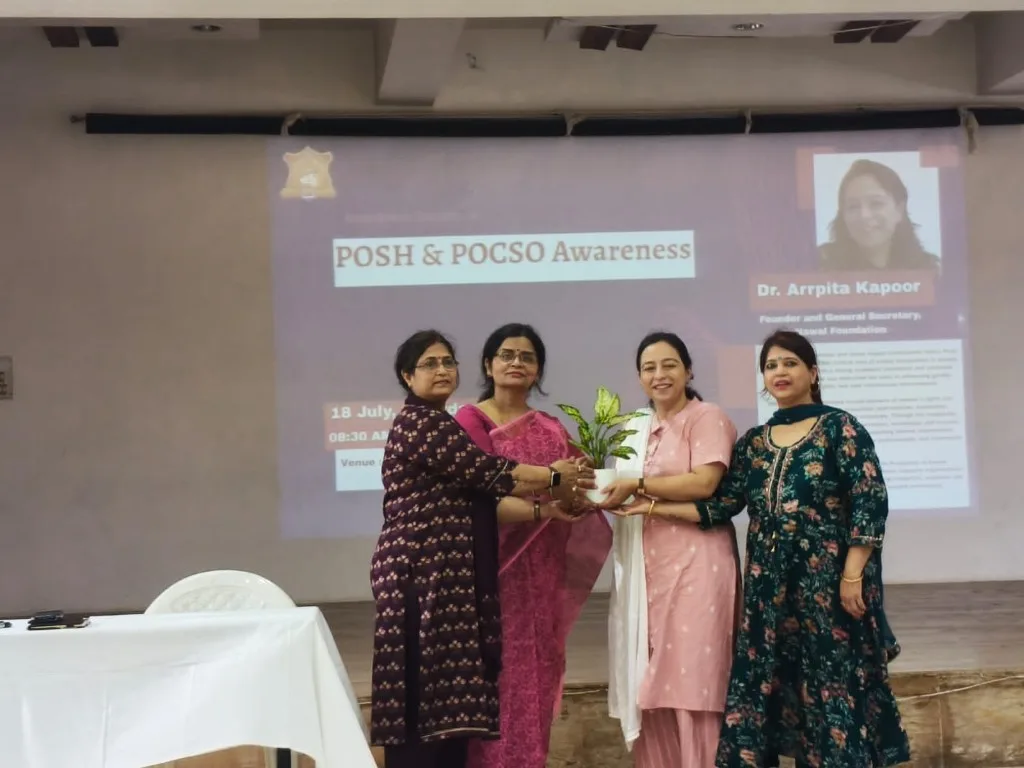
Nawal Foundation team conducting child protection sessions across Lucknow

Fifteen Years On Child Rights — Now Applied To Your Institution

Project Suraksha is our dedicated child-safety initiative in Lucknow. POCSO training is not a compliance add-on for us — it is a continuation of grassroots work we have done with children and families for over a decade.

Book a session

How Our POCSO Training Programme Works

A five-step engagement built for a school calendar, not a one-off assembly.

  1. Pre-Training Assessment

    We review your existing child protection policy (if any), staff structure, and whether a nodal reporting person has been appointed — and tell you plainly where you currently stand.

  2. Session Customisation

    Staff sessions and student modules are set to the right age band, language, and format — onsite, online or hybrid — and scheduled around your academic calendar.

  3. Delivery

    Case-based, non-graphic sessions for staff; age-appropriate, facilitator-led sessions for students. Trained facilitators only for any session involving minors.

  4. Assessment And Certification

    Participation certificates for staff plus an attendance and coverage record for your compliance file and board inspection.

  5. Post-Training Support

    Policy handover, nodal officer handholding, and a scheduled annual refresher aligned to your academic year.

Training Formats And Duration

ProgrammeDurationForMode
Staff awareness & reporting training2–3 hoursTeaching & non-teaching staffOnsite / Online
Student safe-touch session (primary)45 minutesGrades 1–5Onsite, in-classroom
Student safety session (middle & senior)60 minutesGrades 6–12Onsite, in-classroom
Leadership & management briefing90 minutesPrincipals, trustees, managementOnsite / Online
Annual refresher2 hoursAll staffOnline

All formats available in English, Hindi or bilingual delivery.

Your POCSO Trainer: Dr. Arrpita Kapoor

Dr. Arrpita Kapoor, Secretary of Nawal Foundation and POCSO trainer in Lucknow

Dr. Arrpita Kapoor holds a Ph.D. in Law and leads Nawal Foundation's work on women's and children's rights, including Project Suraksha — our child-safety initiative in Lucknow. POCSO sessions delivered by someone with a legal specialisation in this exact area, not a generalist trainer reading from a slide deck.

  • Ph.D. in Law; leads all POCSO and child-protection engagements
  • Founded and directs Project Suraksha, Nawal Foundation's child-safety programme
  • Delivers staff training, student sessions, policy drafting and incident advisory
  • Also leads the Foundation's POSH Act training practice — view POSH training services
  • Writes on Indian law and rights — read her articles

Read the full profile

Institutions We Have Trained In Lucknow And Across India

  • 15+Years of experience
  • 3K+People helped
  • 50+Volunteers
  • 5+Cities covered

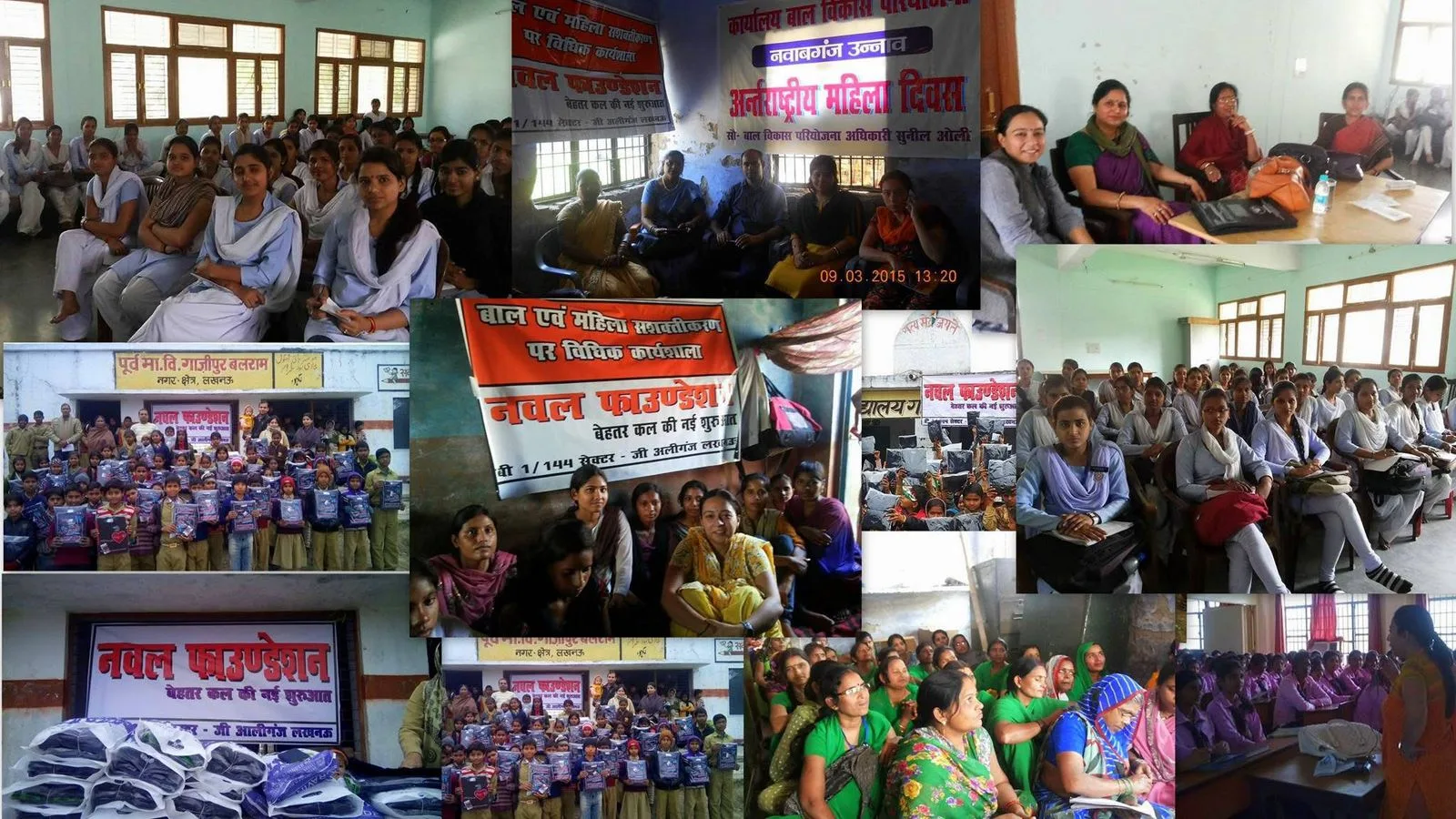
Project Suraksha fieldwork: Nawal Foundation's child-safety initiative has taken our team into schools, Anganwadi-linked programmes and community settings across Lucknow and Uttar Pradesh — running awareness camps, safe-touch modules and family outreach long before POCSO compliance became a board inspection item. That grassroots field experience is what informs every staff training session, student module and child protection policy we draft today.

From Recent Sessions

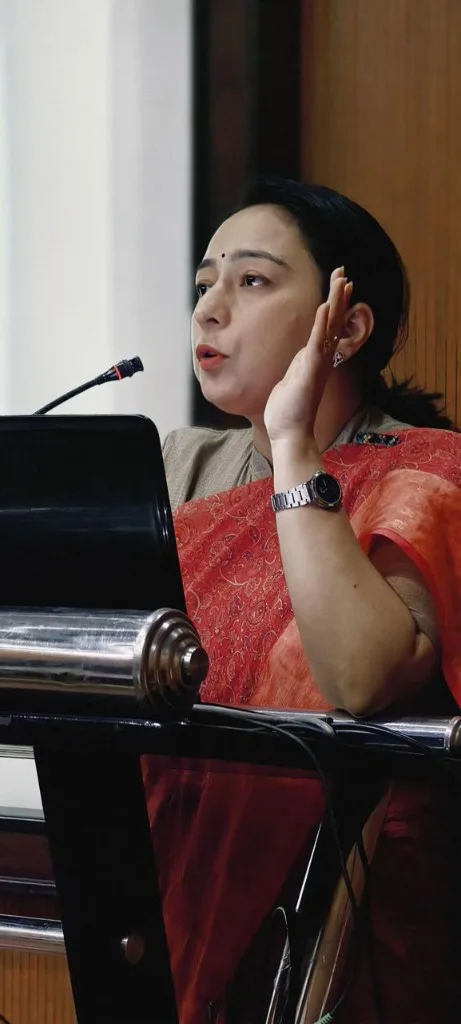
Nawal Foundation conducting a workplace POSH awareness workshop in Lucknow
POSH awareness workshop — interactive session at Arvind Academy, Lucknow
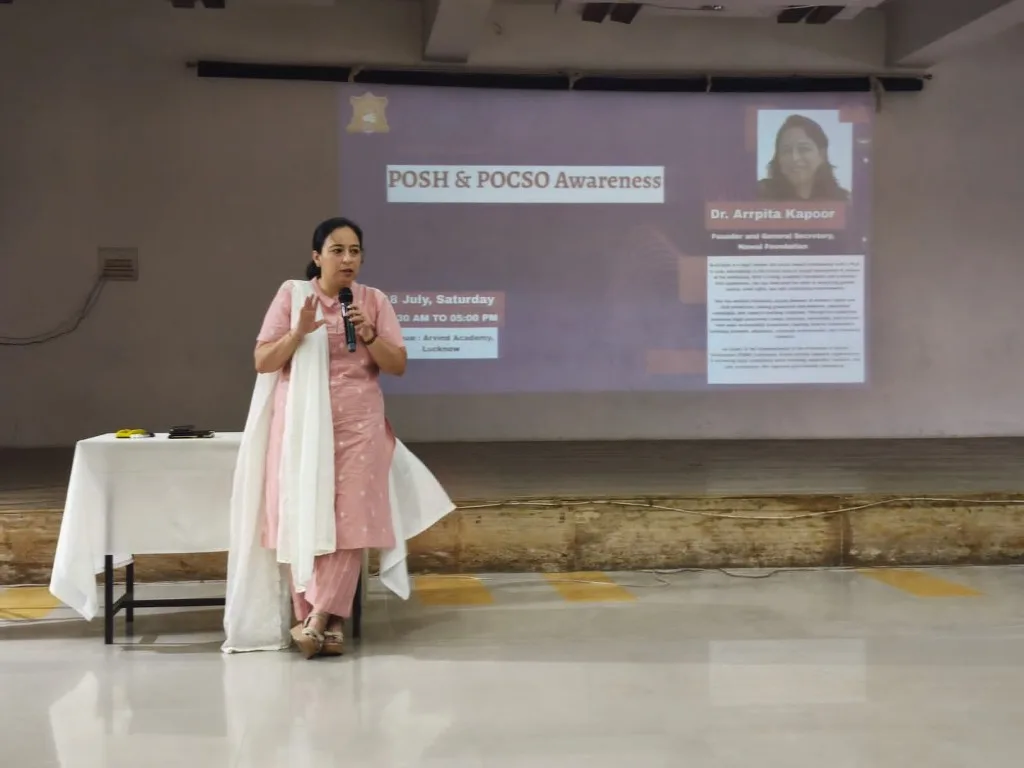
POSH trainer explaining complaint procedures to employees during a workplace training session in Lucknow
Employee POSH training session — participants at Arvind Academy, Lucknow
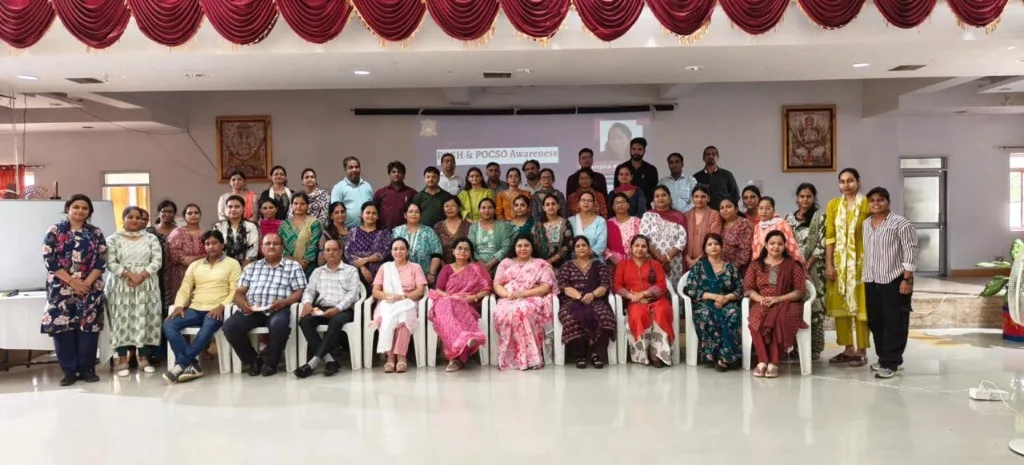
Internal Committee members and staff attending POSH Act training in Lucknow
Internal Committee and staff — POSH Act compliance training, Lucknow
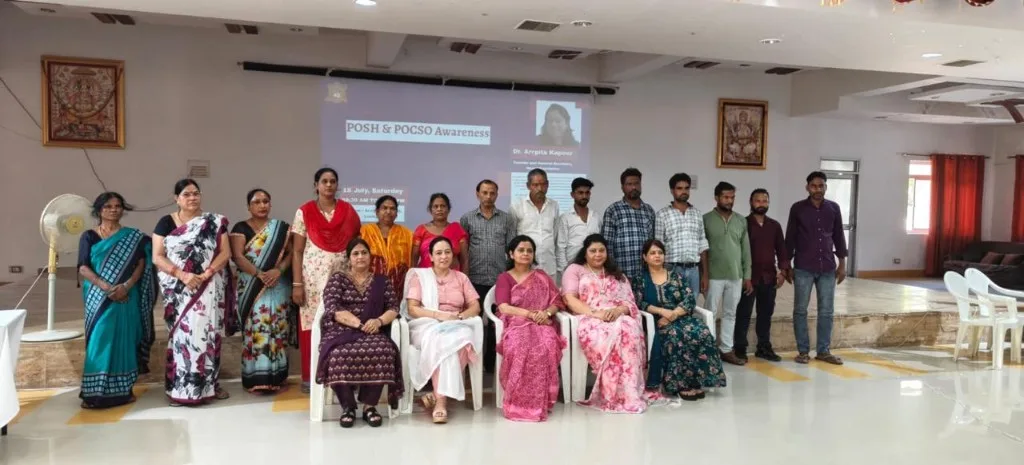
Completion of POSH training workshop at an educational institution in Lucknow
Workshop completion — POSH awareness training, Arvind Academy, Lucknow

POCSO Training Across Lucknow And Uttar Pradesh

Our office is in Sector G, Aliganj, Lucknow, and we deliver POCSO training onsite across the city — Hazratganj, Gomti Nagar, Vibhuti Khand, Indira Nagar, Chinhat and the Amausi area — for schools, hostels and childcare institutions, usually within a week of enquiry.

Beyond the city we travel across Uttar Pradesh for onsite sessions and deliver online staff training pan-India. For schools and childcare institutions in the state, we also help identify the correct District Child Protection Unit and Special Juvenile Police Unit contacts your nodal officer will need.

As a not-for-profit, we offer subsidised and, in many cases, free sessions for government schools, Anganwadi centres and small NGOs in and around Lucknow — this work sits at the core of our founding mission, not at the edge of it.

Nawal Foundation Sector G, Aliganj
Lucknow — 226024, Uttar Pradesh
+91 95595 99991
contact@nawalfoundation.in

POCSO Training Cost In Lucknow

Cost depends on the number of staff and students, the number of sessions, whether delivery is onsite or online, and whether policy drafting or an annual compliance audit is included alongside the training.

As a not-for-profit organisation, our rates typically sit below commercial consultancy pricing, and we offer subsidised or free sessions for government schools, Anganwadi centres and small NGOs. Share your institution's size and requirement and we will send a written quote within one working day.

Request a quote

Why Institutions Choose Nawal Foundation

Legal Grounding, Not A Generic Assembly

Training led by a Ph.D. in law, built around the actual text of the Act and Rules — not a recycled child-safety slideshow.

Age-Appropriate By Design

Separate, carefully worded modules for staff and for students at each grade band — never one session delivered to everyone.

Not-For-Profit Pricing

No upselling. Subsidised or free rates for government schools, Anganwadi centres and small NGOs, because this is founding-mission work for us.

CSR Eligible

12A, 80G and Darpan registered — your CSR or school welfare budget can fund this engagement.

Locally Present In Lucknow

Onsite at short notice, familiar with the local Child Welfare Committee and Special Juvenile Police Unit contacts your school will need.

Rooted In Project Suraksha

POCSO training grows out of a decade of direct child-safety fieldwork, not a compliance line item added to a consultancy's service list.

Frequently Asked Questions About POCSO Training

Is POCSO training mandatory for schools in India?

The POCSO Act itself creates a personal duty on every individual to report known or suspected offences under Section 19. In practice, education boards including CBSE and several State Boards separately mandate that recognised schools maintain a child protection policy and train staff — making structured POCSO training a practical necessity, not just a legal nicety.

What happens if a teacher fails to report suspected abuse?

Under Section 21, failure to report is a punishable offence — imprisonment up to six months, a fine, or both, for an individual. For a person in charge of an institution who fails to report, the punishment extends to imprisonment up to one year, a fine, or both. Reporting "up the chain" internally does not satisfy this duty; the report must reach the police or Special Juvenile Police Unit.

Who is required to report under the POCSO Act?

Any person — not just staff in a formal safeguarding role. A teacher, a bus driver, an office assistant, a coach or a counsellor who has knowledge or a reasonable apprehension that an offence has occurred or is likely to occur must report it. The duty is individual and cannot be discharged by informing a superior alone.

What does a POCSO staff training session actually cover?

Definitions of offences under the Act, recognising behavioural and physical warning signs in children, the exact reporting procedure and who to contact, documentation requirements, and what the law expects from an institution once a disclosure is made. Delivered without graphic detail and appropriate for a mixed staff audience.

Do you conduct safety sessions directly with students?

Yes, using age-appropriate safe-touch/unsafe-touch modules delivered separately for primary, middle and senior grade bands, by trained facilitators, with language calibrated to the age group. We do not use a single session format across all ages.

How is POCSO training different from POSH training?

POSH (the Sexual Harassment of Women at Workplace Act, 2013) governs adult employees in a workplace. POCSO (the Protection of Children from Sexual Offences Act, 2012) governs the safety of minors and applies wherever adults are in a position of care or authority over children. A school needs both: POSH for its employees, and POCSO for its students. See our POSH training services.

Do you provide POCSO training onsite in Lucknow?

Yes. We are based in Sector G, Aliganj and conduct onsite POCSO training across Lucknow, usually within a week of enquiry. We also travel across Uttar Pradesh and deliver online staff training pan-India.

Do you offer free or subsidised POCSO training?

Yes. As a not-for-profit, we offer subsidised and, in many cases, free sessions for government schools, Anganwadi centres and small NGOs in and around Lucknow. Share your institution's details and we will confirm eligibility.

What is a child protection policy, and do we need one?

A child protection policy is a written document setting out your institution's code of conduct for staff, reporting procedure, nodal person for POCSO compliance, and safeguards for visitors, transport and off-campus activities. The POCSO Rules, 2020 and most education board circulars expect institutions working with children to maintain one.

Does POCSO training help with staff background verification?

Training alone does not replace background verification, but we advise institutions on building a screening checklist for new hires, reference checks and an induction module covering the child protection policy — so safeguarding starts before a staff member's first day.

How often should POCSO training be repeated?

At least once a year for all staff, with induction training for every new hire before they begin working with children. Student safety sessions are typically repeated annually as children move up grade bands, since the content and language need to evolve with age.

What should a school do immediately if a child discloses abuse?

Listen without interrogating, do not promise confidentiality, do not contact the alleged offender, and report to the police or Special Juvenile Police Unit without delay — internal reporting to a principal or management does not fulfil the legal reporting duty. Our incident response advisory service supports institutions through this process directly.

Book A POCSO Training Session In Lucknow

Tell us about your institution and requirement. We respond within one working day.

We respond within one working day. Your details are never shared. See our Privacy Policy.

Prefer To Talk Now?

Phone: +91 95595 99991

Email: contact@nawalfoundation.in

Office: Sector G, Aliganj, Lucknow — 226024

Message us on WhatsApp

Download The POCSO Brochure

Programme outline, staff and student modules, formats and what is covered in each.

Download brochure (PDF)

Disclaimer: The information on this page is intended for general awareness and training purposes and should not be treated as legal advice for a specific matter. Organisations should obtain appropriate professional advice for individual cases.

Page last reviewed: August 2026 · Content reviewed by Nawal Foundation training team